




AI Role Play Training for Contact Centers: A Complete Guide



Think about the last time a customer service interaction genuinely impressed you. The agent knew their stuff, moved fast, and made you feel like a person, not a ticket number.
That doesn't happen by accident. It happens when agents are truly ready, not just trained.
Most contact centers miss that distinction. Agents complete onboarding, shadow a senior rep for a few days, and get handed a headset. The gap between what they've seen and what they can do under pressure is enormous. Customers feel it.
Metrigy's AI for Business Success 2024-25 study puts annual contact center agent turnover at 31.2%. For supervisors, that number tells a familiar story: constant onboarding, repeated coaching cycles, and agents who leave before the investment pays off. At that pace, manual contact center training becomes a structural bottleneck that no team can scale around.
AI role play training closes that gap. Agents practice inside realistic simulations with AI-powered conversations, real system workflows, and instant feedback before they ever touch a live call. They make mistakes in the simulator, not on your customers. Supervisors, in turn, can focus their energy on agents who need deeper intervention and on work that drives greater business value.
This guide breaks down how AI role play in contact centers works, how it compares to traditional coaching methods, common myths worth addressing, and how to choose the right solution for your team.
Key Takeaways
- Practice drives readiness. AI role play lets agents learn by doing, not just by watching, reading, or attending training sessions.
- Scale coaching without scaling resources. Agents receive instant feedback and unlimited practice opportunities without requiring constant supervisor involvement.
- Measure readiness, not training completion. The goal is to verify that agents can perform consistently before they handle live customer interactions.
- Choose for operational impact, not AI novelty. The best platforms make training easy to create, coaching easy to target, and performance improvement easy to measure at scale.
What is AI role play training for contact centers?
AI sales role play training is a contact center training approach that uses artificial intelligence to simulate realistic customer interactions, allowing agents to practice conversations, workflows, and decision-making in a risk-free environment.
Unlike traditional role play, which depends on trainers, peers, or scripted scenarios, AI role play provides on-demand practice with dynamic customer personas that adapt to an agent's responses in real time. Agents can repeat scenarios, receive immediate feedback, and demonstrate readiness before handling live customer interactions.
The result is more consistent training, faster skill development, and a scalable way to prepare agents for real-world customer conversations.
Why contact center training needs a rethink
If you're running a contact center or a call center, you already know your training breaks down in the traditional training-to-floor transition. And several factors are widening the gap.
System complexity increases cognitive load for agents
Most customer service training treats software and empathy as separate tracks. But, when an agent's mental bandwidth is consumed by a complex CRM, they lose the ability to pick up on critical customer cues. This leads to more dead air and low sentiment scores. Because agents have never practiced these as a single unified motion, the complexity of real interactions overloads their cognition. Over time, they get frustrated and burnt out.
Rising customer expectations from customer support
With chatbots and IVR systems automatically deflecting simple requests, the easy calls are gone. All the emotionally-charged, high-stakes interactions go to human agents. Script-reading is insufficient to handle agitated customers alongside tricky systems. Agents need fluidity and confidence that traditional training simply doesn't provide.
Sandboxes, shadowing, and scripts do not scale in contact centers
IT-heavy sandboxes are expensive to maintain, prone to downtime, and lack the real-time pressure and conversational nuances of a true customer exchange. Plus, these environments are too rigid to scale with rapid product updates or high-volume hiring cycles.
Shadowing is passive. Listening to a senior agent doesn't build the muscle memory needed to handle tough conversations yourself. And peer-to-peer role play pulls your top performers off the phones to train new hires.
To scale training and readiness, contact centers need a practice approach that's repeatable, self-directed, and cost-efficient.
📊 The business impact of manual training and unprepared agents
- Higher AHT: Agents who aren't fluent in their tools spend minutes in dead air, searching for answers. That bloats AHT fast.
- Lower FCR: FCR falls below industry benchmark of 70% to 79% owing to agent error or skill gaps.
- Compliance risk: In regulated industries like finance or healthcare, a new agent going off-script becomes a legal liability.
- Attrition: Poor training affects agent productivity and morale, eventually leading to burnout and attrition. Rehiring and training costs compound over time and impact profitability.
Key benefits of AI role play training for contact centers
Most contact center training programs are built around knowledge transfer. You teach agents what to say, walk them through the systems, and run them through a few scripted customer support scenarios, and move them to the floor. The assumption here is that exposure equals readiness; it doesn't. Readiness is built through repetition under realistic pressure. And that's precisely what AI role play delivers.
Agents practice the full job, not just the conversation
An agent is simultaneously listening to a customer, navigating two or three systems, logging notes, and making real-time decisions — all while staying calm and on-brand. Traditional training prepares agents for each of these tasks in isolation. AI role play simulations bring them together, letting agents practice the conversation and the system workflow at the same time, in a controlled environment where mistakes don't cost you a customer.
New hires ramp faster without consuming supervisor bandwidth
The traditional ramp model is resource-heavy. Supervisors spend hours shadowing new hires, listening to calls, and debriefing — only to repeat the cycle when the next batch arrives. AI role play changes that dynamic. New hires can run hundreds of practice scenarios independently, getting scored and coached by AI on empathy, pacing, accuracy, and keyword adherence. Supervisors step in where human judgment is genuinely needed, not for tasks a simulation can handle.
Coaching becomes targeted, not reactive
In most contact centers, coaching happens after something goes wrong. A QA flag surfaces, a CSAT score dips, a supervisor catches a bad call. The feedback loop is slow and often too late. AI role play for contact centers generates objective performance data before agents go live — scoring consistency, identifying skill gaps, and flagging which agents need additional practice on which scenarios.
High-pressure scenarios can be practiced safely
Irate customers, compliance-heavy conversations, complex escalations are the interactions that break underprepared agents and drive early attrition. With AI role play in contact centers, agents encounter these scenarios repeatedly in the simulator until the response becomes instinct. By the time they face the real version, it's familiar territory.
Performance becomes measurable before it hits the floor
One of the most underrated benefits is visibility. Leaders can see, before an agent takes a single live call, how consistently they handle different scenario types, where their confidence breaks down, and whether they're genuinely ready. That kind of pre-deployment readiness data is something traditional training simply can't produce.
Taken together, these turn into a structural shift in how readiness gets built in contact centers, and how supervisors, managers, and CX leaders spend their time.
Perfect Your Pitch with AI Sales Role Play
Traditional role play vs. AI role play in contact centers
Training philosophy looks very different depending on which side of this table your contact center sits on.
| Dimension | Traditional role play | AI role play |
|---|---|---|
| Availability | Scheduled sessions with a supervisor or peer | Available on demand, 24/7, without requiring a trainer or supervisor to be present |
| Scale | One supervisor coaches one agent at a time. Difficult to scale during high-volume hiring cycles | Hundreds of agents can practice simultaneously without additional resource overhead |
| Scenario realism | Scripts are pre-defined and predictable | Dynamic AI personas respond unpredictably, mirroring real customer behavior including frustration, confusion, and pushback |
| System simulation | Conversation is practiced separately from system navigation; rarely replicated together | Agents practice the conversation and system workflow simultaneously, as it happens on a live call |
| Feedback quality | Subjective and inconsistent. Depends on the supervisor's experience, attention, and mood | Objective and standardized. Scored on empathy, pacing, keyword adherence, accuracy, and system proficiency |
| Feedback speed | Delivered after the session, sometimes days later | Delivered instantly |
| Readiness visibility | Hard to quantify — supervisors make judgment calls on who is ready | Data-driven readiness scores give leaders a clear picture before agents go live |
| Coaching burden on supervisors | High as supervisors spend significant time on basic skill-building for every new hire | Reduced — supervisors focus on agents who need deeper human intervention |
| Pre-deployment agent readiness data | Minimal — agent readiness is assumed, not measured | Quantifiable — leaders see performance data before an agent touches a live call |
Common myths about AI role play training in contact centers
If you've spent time in contact center training — running nesting programs, sitting in on peer role plays, calibrating QA scorecards — you've probably heard some version of these objections. They're worth addressing head-on, because most of them come from a reasonable place. They just don't hold up against how AI role play actually works in practice.
Myth 1: "AI can't replicate real customer behavior"
This is the most common pushback, and it made sense a few years ago. Early conversational AI was rigid. It followed decision trees and fell apart the moment a response went off-script. That's not what modern AI role play is.
Today's simulations are built on generative AI that responds dynamically to what the agent says and how they say it. If an agent fumbles an explanation, the AI customer gets confused. If they use an empathetic tone, the AI responds to that too. Frustrated personas escalate. Skeptical personas push back. The behavior isn't scripted; it's reactive, which is exactly what real customer interactions demand.
Myth 2: "It's just a fancier e-learning module"
In e-learning, you watch, you read, you click through, you pass a quiz. AI role play is active — the agent is doing something, responding in real time, making decisions under simulated pressure. The distinction matters because skill is built through practice with feedback.
📌 Worth Noting: A 2025 meta-analysis found that role play-based training produces an effect size of ~0.82, which researchers classify as large, significantly outperforming traditional instruction methods. That's not an e-learning outcome.
Myth 3: "Agents find it awkward and won't engage with it"
This one usually comes from people who've watched agents squirm through forced peer role plays in a conference room, which is a fair observation. That awkwardness is real. But it comes from being watched and judged by colleagues, not from the exercise itself.
AI role play removes that dynamic entirely. Agents practice privately, on their own schedule, without a supervisor watching over their shoulder. It is especially helpful for new hires who are still building confidence. There's no embarrassment in making a mistake in front of an AI.
Myth 4: "Supervisors still need to review every session for it to be useful"
This assumption carries over from traditional role play, where the supervisor's presence was the entire point. When AI role play is implemented in contact centers, the feedback loop is automated. Sessions are scored on empathy, pacing, keyword usage, accuracy, and system navigation without a human having to listen to every recording. Supervisors get a dashboard, not a to-do list. They review flagged sessions and outlier performance, not every rep's practice run. That's the scalability shift that makes this model fundamentally different.
Myth 5: "It works for scripts but not for complex or emotional conversations"
This concern usually comes from QA leads and senior trainers who've spent years calibrating human judgment in coaching sessions. Their instinct is right in one sense — emotional intelligence is nuanced and hard to teach. But AI role play isn't trying to replace human judgment on complex calls. It's handling the volume work: the repetitive scenarios, the compliance conversations, the product knowledge checks, the system navigation drills. That frees up supervisors to spend their limited coaching time on exactly the high-complexity, high-emotion conversations where human feedback genuinely matters.
How AI role play training works in contact centers (step-by-step)
An AI simulation platform mirrors the lifecycle of a real interaction, from preparation to post-call analysis.
Steps | What happens | Why it matters |
|---|---|---|
| Scenario design & persona setup | Training teams create realistic customer support scenarios using QA data, common complaints, escalations, and high-risk interactions. Customer personas are configured with specific personalities, issues, and communication styles. | Ensures training reflects real customer conversations and prepares agents for situations they will actually encounter. |
| System environment replication | The platform recreates the agent's working environment, including CRM, ticketing systems, knowledge bases, and after-call workflows. | Agents practice both conversation skills and system navigation in a realistic setting before handling live customers. |
| AI-powered simulation | Agents independently launch scenarios and interact with AI customers that respond dynamically based on the agent's words, tone, and actions. Simultaneously, agents complete required system tasks. | Creates realistic, unscripted practice that mirrors live customer interactions and operational workflows. |
| Automated performance feedback | After each session, the platform evaluates communication skills, compliance adherence, information accuracy, workflow completion, and customer handling effectiveness. | Provides immediate, objective feedback with specific examples of strengths and improvement areas. |
| Repetition and skill reinforcement | Agents can repeat scenarios as often as needed without requiring trainers, supervisors, or role-play partners. | Builds confidence, consistency, and muscle memory through deliberate practice at scale. |
| Supervisor insights & coaching | Performance data is aggregated into dashboards that highlight skill gaps, progress trends, and readiness levels across individuals and teams. | Enables targeted coaching based on data rather than manual observation, reducing supervisor workload. |
| Readiness certification | Agents must achieve predefined performance thresholds across scenarios, workflows, and compliance requirements before handling live interactions. | Ensures agents demonstrate measurable competence before going live, improving customer outcomes and reducing onboarding risk. |
How Mindtickle AI role play simulator applies this workflow
Mindtickle's AI Role Play Simulator follows the same core training model but combines AI-powered customer conversations with system simulations, automated coaching, and readiness tracking in a single platform. Agents can practice realistic customer interactions while simultaneously navigating the workflows and systems they use on live calls.
| Capability | How Mindtickle applies it |
|---|---|
| Scenario creation | Training teams build role plays based on real customer interactions, skill gaps, and operational priorities. AI-assisted tools help accelerate scenario creation and customization. |
| AI customer personas | Agents interact with dynamic AI personas that respond naturally to tone, questioning, explanations, and objection handling rather than following fixed scripts. |
| System simulation | Role plays can incorporate system workflows so agents practice conversations and operational tasks simultaneously. |
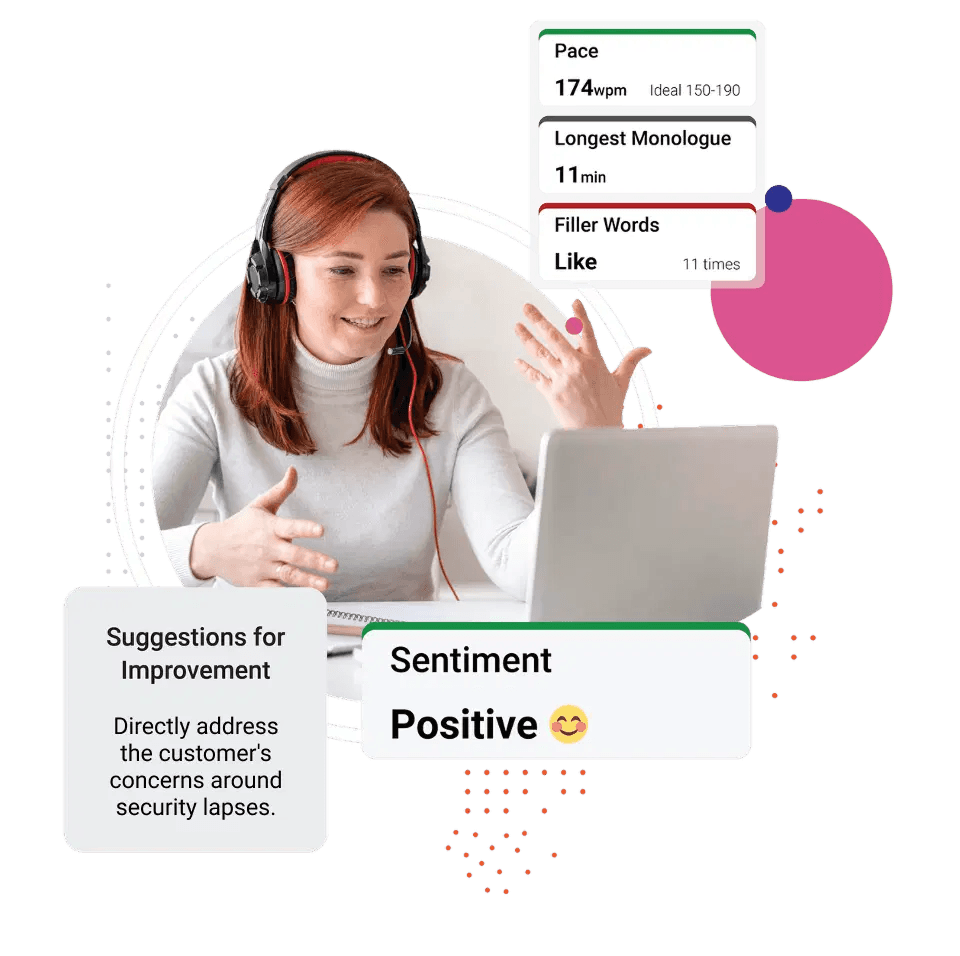
| Instant feedback | The platform automatically evaluates performance and provides immediate feedback on communication skills, execution, and readiness. |
| Repeatable practice | Agents can access simulations on demand and repeat scenarios until they demonstrate proficiency. |
| Manager coaching | Supervisors receive performance insights and can assign targeted simulations to address specific skill gaps identified through training or real customer interactions. |
| Readiness Measurement | Contact centers can track scores, proficiency, and improvement trends to determine when agents are prepared for live customer interactions. |
💡Where Mindtickle stands out
The value of platforms like Mindtickle is that they connect learning, practice, coaching, and performance measurement into a continuous improvement cycle. Instead of treating role play as a one-time training exercise, you can use AI simulations to identify skill gaps, reinforce behaviors, measure readiness, and improve operational KPIs such as first contact resolution (FCR), average handle time (AHT), and agent ramp time.
What to look for in an AI role play training platform for contact centers
Most AI role play platforms look similar during a demo. The real differences show up six months later, when your training team needs to create new scenarios, managers need coaching insights, and operations leaders want proof that training is improving performance.
Here are the factors that matter most when evaluating a platform.
1. Prioritize scenario creation over AI sophistication
Many vendors lead with impressive AI conversations. That's not what determines long-term success. What matters is how quickly your team can create, update, and deploy training scenarios. Products, policies, workflows, and customer expectations change constantly. If every scenario update requires vendor support or specialized expertise, the platform becomes difficult to scale. Choose a platform that enables your training and QA teams to build and modify scenarios independently.
2. Demand actionable feedback
Feedback should answer one question clearly: What should the agent do differently next time?
Avoid platforms that provide generic scores without context. The best systems identify specific moments where an interaction went off track and explain why. If agents cannot connect the feedback to a behavior they can change, the score has limited value.
3. Evaluate coaching efficiency
One of the biggest promises of AI role play is reducing the manual effort required for coaching. Ask yourself:
- Can supervisors quickly identify recurring skill gaps?
- Can they see trends across multiple agents?
- Can they prioritize coaching based on business impact?
If managers still need to review every simulation manually, the platform is creating additional work rather than reducing it.
4. Look beyond individual scores
Many platforms do a good job measuring individual performance. Fewer help leaders answer broader questions:
- Which skills are improving across the team?
- Which scenarios generate the most failures?
- Where are new hires struggling?
- Which behaviors correlate with operational outcomes?
Training leaders need visibility into patterns, not just agent-level scores.
5. Verify that readiness is measurable
A strong AI role play platform should help define clear performance standards before agents handle live interactions. Whether the goal is onboarding, certification, or upskilling, readiness should be based on demonstrated performance rather than training completion alone. This creates consistency across teams and reduces the risk of sending unprepared agents to production.
🎯 Pro Tip
Think about scale from day one. A platform that works for 100 agents may not work for 5,000. Consider how the solution will handle:
This is extremely important as the cost of maintaining the platform often becomes more important than the cost of purchasing it.
- Multiple business units
- New products and services
- Different customer journeys
- Regulatory changes
- Multiple languages and regions
A practical AI role play platform buying principle for contact centers
When comparing AI role play simulator platforms for contact centers, focus less on how impressive the AI sounds during a demo and more on how easily your contact center can create training, measure readiness, and operationalize coaching at scale.
The most successful deployments aren't necessarily powered by the most sophisticated AI. They're powered by platforms that make it easy to deliver relevant practice, identify skill gaps quickly, and continuously improve agent performance without creating additional administrative burden.
If you're exploring AI role play training for your contact center, it's worth looking at how leading platforms bring those capabilities together. Mindtickle's AI Role Play Simulator is one example, combining AI-driven customer interactions, system simulations, automated feedback, coaching insights, and readiness measurement in a single experience.
Ultimately, the best way to evaluate any platform is to see it in action. If you're curious about what's possible with Mindtickle, schedule a demo today!
Frequently Asked Questions
About the Author
Senior Product Marketing Manager
Poornima Mohandas is a business journalist turned product marketer with over two decades of professional experience. At Mindtickle, she handles go-to-market for the market leading, Training, Coaching, AI Role Play products, and runs the company’s competitive intel program. Her writings have been published in reputed trade publications like Mind the Product and the Product Marketing Alliance.

Subscribe to the blog
Get the latest sales enablement tips, guides, and industry best practices delivered to your inbox. Unsubscribe anytime.